House Passes Medicare Doc Fix Bill. How Did Your Representative Vote?
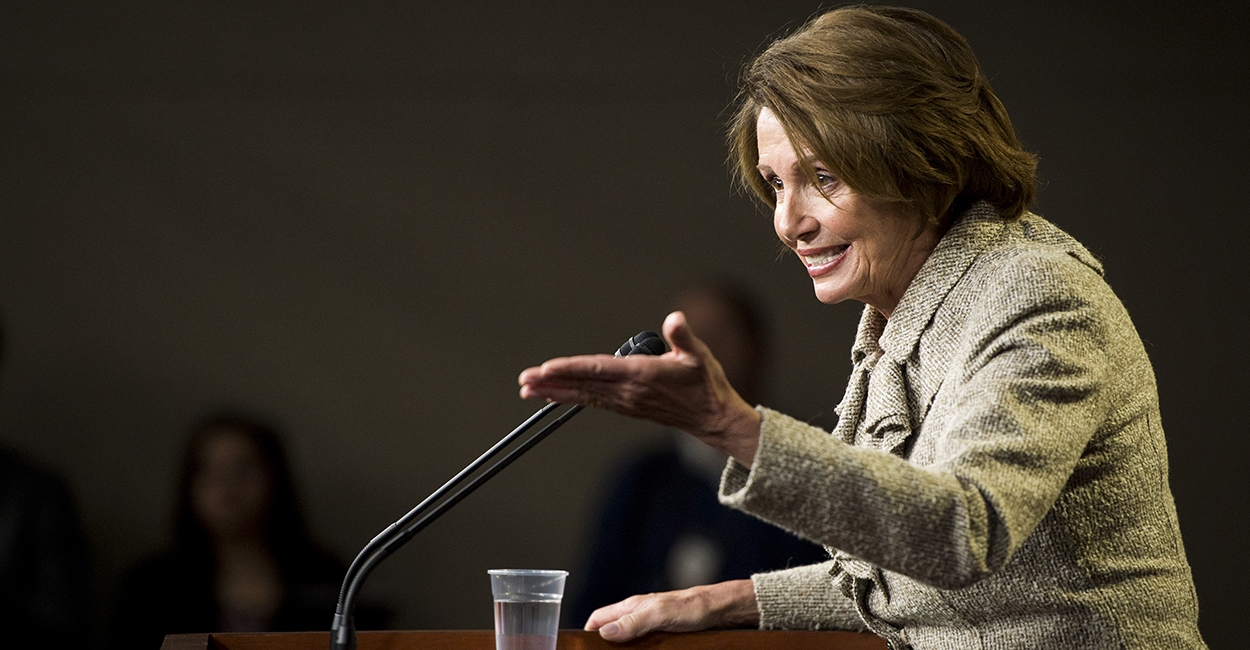
House Minority Leader witch Nancy Pelosi, D-Calif.....left her broom out behind the curtain for a quick getaway... I wonder what would happen if the 10 lbs. of make-up fell off?
(Photo: Bill Clark/CQ Roll Call)
The House Thursday passed the Medicare Access and CHIP Reauthorization Act of 2015—the so-called “doc fix” bill.
The legislation was approved in a 392-37 vote.
The bill, a bipartisan deal by House Speaker John Boehner, R-Ohio, and Minority Leader Nancy Pelosi, D-Calif., is an effort to make sure Medicare doctors don’t receive a 21 percent pay cut for their services and to reauthorize the Children’s Health Insurance Program, or CHIP, for two more years.
The bill would amend title XVIII of the Social Security Act to repeal Medicare’s Sustainable Growth Rate, the formula that determines how doctors who accept Medicare patients are paid, and replace it with an alternative method.
A report by the Congressional Budget Office found that the plan will increase the deficit by $141 billion over the next decade.
Thirty-three Republicans and four Democrats voted against the bill. These members include Reps. Justin Amash, R-Mich.; Darrel Issa, R-Calif.; Louie Gohmert, R-Texas; and Jim Cooper, D-Tenn.
Here are all of the 37 members who voted “nay:”
 Reps. Rubén Hinojosa, D-Texas; Donald Payne, D-N.J.; Raul Ruiz, D-Calif.; and Adam Smith, D-Wash., did not vote.
The bill will be taken up for consideration by the Senate.
In a statement, the White House expressed support for the legislation:
Dr. Robert Wah, the president of the American Medical Association, also praised the “doc fix” plan in a statement:
“The American Medical Association (AMA) applauds the U.S. House of Representatives for overwhelmingly passing a long overdue bill to permanently eliminate the flawed Sustainable Growth Rate formula and put in place important Medicare payment and delivery reforms that will improve the health of the nation. While many members of the U.S. House of Representatives, Democrats and Republicans, helped to achieve to today’s result, Speaker Boehner and Minority Leader Pelosi deserve special praise for exhibiting leadership and courage in forging this bipartisan package.”
“We urge the U.S. Senate to take swift action to approve the policy and send it to the President’s desk before the current SGR payment patch expires on March 31,” Wah added.
Matt Kibbe, the president of FreedomWorks, called the legislation fiscally irresponsible in a statement:
“The Sustainable Growth Rate has been a problem since its inception, a misguided though noble attempt to slow down the growth of Medicare spending. A permanent repeal of the SGR does make sense compared to the annual exercise of delaying it, as Congress has done for over a decade.”
“However, keeping physician payments from being reduced has a real (and massive) cost—nearly $200 billion over 10 years—which Congress must account for. Instead this bill as written would increase the deficit by $141 billion over ten years. The minor structural tweaks to Medicare that would supposedly compensate for this spending do not kick in for several years, could easily be put off by future Congresses, and in any case fail stop an increase in deficits even after the ten-year budget window.”
The legislation was approved in a 392-37 vote.
The bill, a bipartisan deal by House Speaker John Boehner, R-Ohio, and Minority Leader Nancy Pelosi, D-Calif., is an effort to make sure Medicare doctors don’t receive a 21 percent pay cut for their services and to reauthorize the Children’s Health Insurance Program, or CHIP, for two more years.
The bill would amend title XVIII of the Social Security Act to repeal Medicare’s Sustainable Growth Rate, the formula that determines how doctors who accept Medicare patients are paid, and replace it with an alternative method.
A report by the Congressional Budget Office found that the plan will increase the deficit by $141 billion over the next decade.
Thirty-three Republicans and four Democrats voted against the bill. These members include Reps. Justin Amash, R-Mich.; Darrel Issa, R-Calif.; Louie Gohmert, R-Texas; and Jim Cooper, D-Tenn.
Here are all of the 37 members who voted “nay:”
Screenshot from clerk.house.gov.
The bill will be taken up for consideration by the Senate.
In a statement, the White House expressed support for the legislation:
Dr. Robert Wah, the president of the American Medical Association, also praised the “doc fix” plan in a statement:
“The American Medical Association (AMA) applauds the U.S. House of Representatives for overwhelmingly passing a long overdue bill to permanently eliminate the flawed Sustainable Growth Rate formula and put in place important Medicare payment and delivery reforms that will improve the health of the nation. While many members of the U.S. House of Representatives, Democrats and Republicans, helped to achieve to today’s result, Speaker Boehner and Minority Leader Pelosi deserve special praise for exhibiting leadership and courage in forging this bipartisan package.”
“We urge the U.S. Senate to take swift action to approve the policy and send it to the President’s desk before the current SGR payment patch expires on March 31,” Wah added.
Matt Kibbe, the president of FreedomWorks, called the legislation fiscally irresponsible in a statement:
“The Sustainable Growth Rate has been a problem since its inception, a misguided though noble attempt to slow down the growth of Medicare spending. A permanent repeal of the SGR does make sense compared to the annual exercise of delaying it, as Congress has done for over a decade.”
“However, keeping physician payments from being reduced has a real (and massive) cost—nearly $200 billion over 10 years—which Congress must account for. Instead this bill as written would increase the deficit by $141 billion over ten years. The minor structural tweaks to Medicare that would supposedly compensate for this spending do not kick in for several years, could easily be put off by future Congresses, and in any case fail stop an increase in deficits even after the ten-year budget window.”


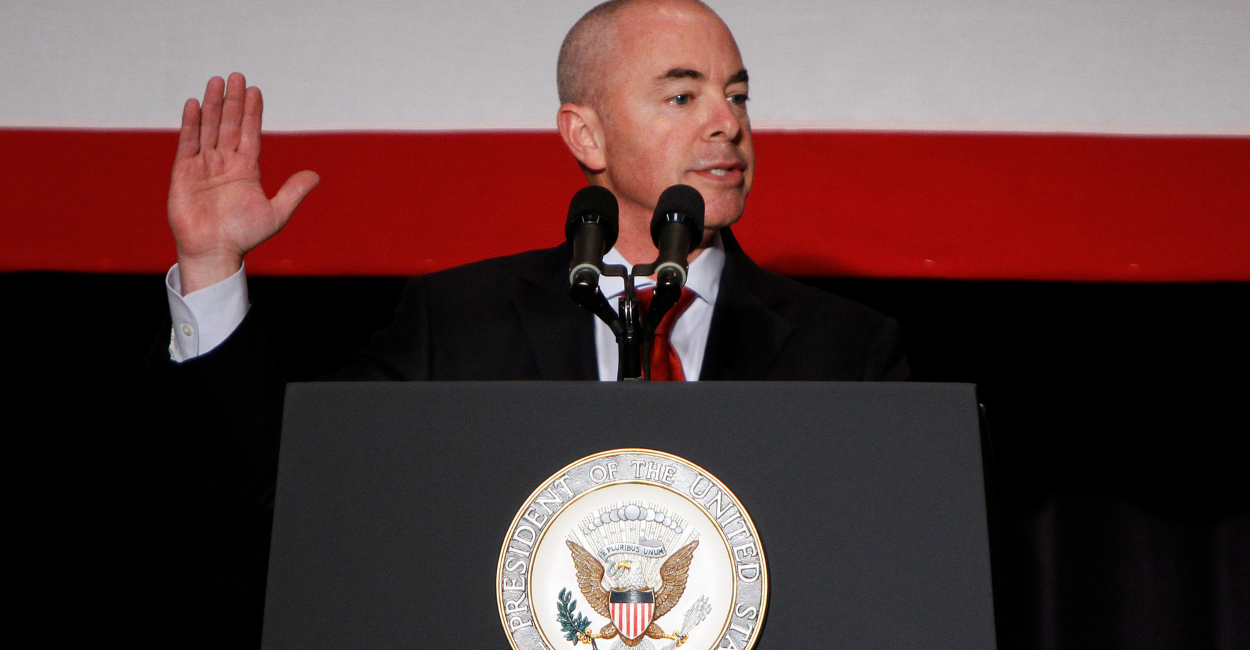







According to the inspector general, Mayorkas “exerted improper influence in the normal processing and adjudication of EB-5 immigration program benefits.”
The inspector general found that during President Obama’s first term, Mayorkas, then head of the U.S. Citizenship and Immigration Services, pressured officials of that agency to ensure that well-connected politicos were able to acquire EB-5 visas, which are supposed to provide green cards to individuals who invest in the U.S. or create jobs in the U.S.
The most notable beneficiaries of Mayorkas’ improprieties included then-Senate Majority Leader Harry Reid, D-Nev., and former Pennsylvania Gov. Ed Rendell, a Democrat. Anthony Rodham, brother of then-Secretary of State Hillary Clinton, and Terry McAuliffe, a former Clinton fundraiser who is now governor of Virginia, both received EB-5 visas.
In its investigation, the inspector general found “the number and variety of witnesses is highly unusual. It is also unusual that a significant percentage of witnesses… would talk to us only after being assured that their identities would remain confidential…That so many individuals were willing to step forward and tell us what happened is evidence of deep resentment about Mr. Mayorkas’ actions related to the EB-5 program…Their allegations were unequivocal: Mr. Mayorkas gave special access and treatment to certain individuals and parties… Employees felt uncomfortable and pressured to comply with managers’ instructions that appeared to have come from Mr. Mayorkas… Again, these comments were not from one or even a couple of disgruntled employees with axes to grind; rather these were individuals throughout the ranks of USCIS, in different locations, engaged in different functions, with different levels of experience.”
The IG report put special emphasis on the case of McAuliffe and his electric car company, GreenTech Automotive, calling Mayorkas’ actions “unprecedented.” Mayorkas stated that McAuliffe left several “caustic” messages including one that was “laced with expletives at a high volume,” urging him to act.
Despite the ongoing investigation, Mayorkas was promoted by President Obama in 2013. Although the inspector general found no laws were likely broken, this behavior is not what the U.S. should expect from its senior government officials. Rather than being held to a higher standard, Secretary Jeh Johnson is doubling down in support of Mayorkas and Mayorkas himself stated that a “complete and total repudiation of the allegations against [him] is the only correct and just conclusion.”
In his current role, Mayorkas is critical to carrying out Obama’s executive actions on immigration, which may explain why the administration promoted and continues to support Mayorkas despite the inspector general’s findings.
Such behavior is one of the reasons the U.S. immigration system is widely considered broken. It rewards the well connected and political interest groups rather than serving the needs of the U.S. economy in a fair and justified manner.
Rather than fixing the system, the Obama administration has gone to great lengths to cripple and abuse the system for its own designs. Similarly, the administration’s push to promote green energy and the lack of transparency with which it has pursued this has led to billions of dollars wasted in taxpayer money.
The policies themselves—the taxpayer-funded grants, government-backed loans, and other preferential treatment—are where to point the blame. These policies create the incentive for lobbyists to pressure Washington for preferential treatment.
The U.S. deserves better than a crony immigration system and crony capitalism that rewards politically connected groups over economic viability. It deserves a government that gives favoritism to none but provides opportunity to all.