Thursday, March 26, 2015
The Price Of Ground Beef Has DOUBLED Since The Last Financial Crisis
 |
| Source |
Activist Post
Since the depths of the last recession, the price of ground beef in the United States has doubled. Has your paycheck doubled since then? Even though the Federal Reserve insists that we are in a “low inflation” environment, the government’s own numbers show that the price of ground beef has been on an unprecedented run over the past six years.
In early 2009, the average price of a pound of ground beef was hovering near 2 dollars. In February, it hit a brand new all-time record high of $4.238 per pound. Even just 12 months ago, the price of ground beef was sitting at $3.555 per pound. So we are talking about a huge increase. And this hits American families where they really live.
Each year, the average American consumes approximately 270 pounds of meat. The only nation in the world that eats more meat than we do is Luxembourg. If the paychecks of American workers were going up fast enough to deal with this increase, it wouldn’t be that big of a deal. But of course that is not happening. In an article just last week, I showed that real median household income is a couple thousand dollars lower now than it was during the depths of the last recession. The middle class is being squeezed, and we are rapidly getting to the point where burgers are going to be considered a “luxury” item.
The following chart was posted by the Economic Policy Journal on Wednesday, and it incorporates the latest data from the Bureau of Labor Statistics. When I first saw it, I was rather stunned. I knew that the price of ground beef had become rather outrageous in my local grocery stores, but I had no idea just how much damage had been done over the past six years…

The biggest reason why the price of ground beef has been going up is the fact that the U.S. cattle herd has been shrinking. It shrunk seven years in a row, and on January 1st, 2014 it was the smallest that it had been since 1951
The good news is that the decline appears to have stopped, at least for the moment. According to the Wall Street Journal, the size of the U.S. cattle herd actually increased by 1 percent last year…
The U.S. cattle herd expanded in 2014 for the first time in eight years, offering hope to consumers that beef prices could start to subside after soaring to a series of records.
The nation’s cattle supply increased 1% in the year through Jan. 1 to 89.8 million head, according to data released Friday by the U.S. Agriculture Department, reversing a steady decline fueled by prolonged drought in the southern U.S. Great Plains and industry consolidation that encouraged many ranchers to thin herds.But an increase of 1 percent is just barely going to keep up with the official population growth rate. If you factor in illegal immigration, we are still losing ground.
And if we have another major drought in cattle country this summer, the cattle herd is going to start shrinking again.
In addition, the price of food overall has been steadily rising for years. Here is a chart that I shared the other day…

It boggles the mind that the Federal Reserve can claim that we are in a “low inflation” environment. Anyone that goes grocery shopping feels the pain of these rising prices every time that they go to the store.
In the list that I put together yesterday, I included the following statistic…
Almost half of all Americans (47 percent) do not put a single penny out of their paychecks into savings.One of the primary reasons why so many Americans are not saving any money is because many families simply cannot save any money. Their paychecks are stagnant while the cost of living just keeps going up and up.
There simply are not enough “good jobs” out there anymore. Our economy continues to bleed middle class jobs and the competition for the jobs that remain is quite intense.
Do you know what the two most common occupations in America today are?
 According to the Bureau of Labor Statistics, they are “retail sales clerk” and “cashier”.
And of course neither of those “occupations” pays even close to what is required to support a middle class family.
On average, a retail sales clerk makes $24,020 a year, and a cashier makes $20,670 a year.
Because the quality of our jobs has declined so much, there are millions of American families today in which both the mother and the father are working multiple jobs in a desperate attempt to make ends meet each month.
But don’t worry, the Federal Reserve says that we are nearly at “full employment“, and Barack Obama says that everything is going to be just fine.
Actually, the truth is that things are about to get a lot worse. At this point, we are even getting pessimistic numbers out of the Federal Reserve. Just this week we learned that the Fed is now projecting that economic growth for the first quarter of 2015 will be barely above zero…
From almost 2.5% GDP growth expectations in February, The Atlanta Fed’s GDPNow model has now collapsed its estimates of Q1 GDP growth to just 0.2% – plunging from +1.4% just 2 weeks ago. The reality of plunging capex and no decoupling is starting to rear its ugly head in the hard data and as the sun warms things up, weather will start to lose its ability to sway sentiment.We are at a turning point. The bubble of false stability that we have been living in is rapidly coming to an end, and when people start to realize that another great economic crisis is coming there is going to be a lot of panic.
And as far as food prices go, they are just going to keep taking a bigger chunk out of all of our wallets.
As high as prices are already, the truth is that your food dollars are never going to go further than they do right now.
So let us hope for the best, but let us also get prepared for the worst.
This article first appeared here at the Economic Collapse Blog. Michael Snyder is a writer, speaker and activist who writes and edits his own blogs The American Dream and Economic Collapse Blog.











One would think it wouldn’t be too difficult to attract private financing or self-finance with that kind of stature in the market.
Yet, the Department of Energy conditionally approved a $259 million taxpayer-backed loan, announcing it Thursday.
That was the wrong decision to make. In addition to risking taxpayer dollars by directing investments to politicallypreferred technologies, government meddling in financial markets also harms the economy.
Rather than trying to improve upon the Energy Department loan and loan guarantee programs, policymakers should eliminate them.
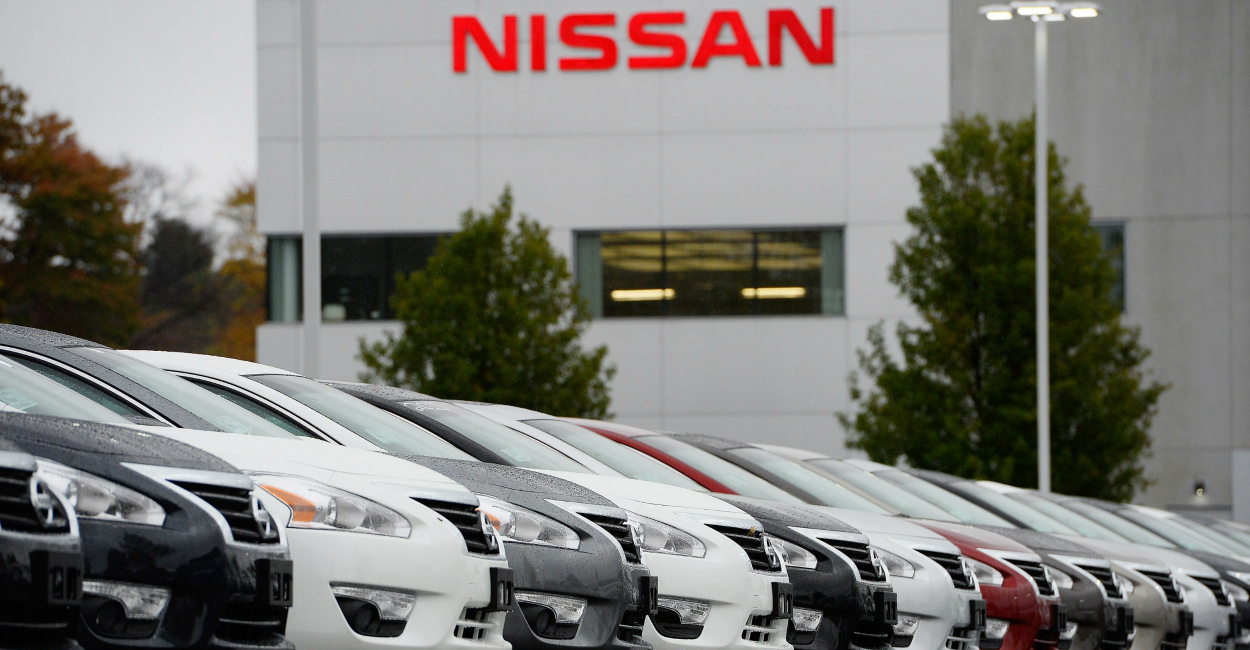
The Alcoa loan is part of the Energy Department’s Advanced Technology Vehicles Manufacturing program. The department has awarded five companies with loans, including two that the agency discontinued. The program’s biggest black eye is Fisker Automotive, an electric vehicle company that received a $529 million loan in April 2010 but declared bankruptcy just three years later. The Vehicle Production Group, which made handicap accessible taxi cabs, has also gone under. The two largest loans in the program went to well-established companies: Ford and Nissan.
The adverse economic impacts are not just about putting taxpayer dollars at risk, although, as we’ve seen with defunct companies like Solyndra and Fisker, massive amounts of taxpayer dollars can be lost in these schemes.
Whether a company that receives a Department of Energy loan is profitable or not, the program is misguided because it skews the rules of free enterprise. Federal loans and loan guarantees promote cronyism that rewards political connectedness over market viability.
The number of investment opportunities is broad and expansive, but the capital to finance them is not. This requires that choices be made among the different investments. Through a number of mechanisms, including grants, loans, loan guarantees, mandates and targeted tax credits, the federal government clouds these decisions. Government spending and financing programs essentially pull capital out of those limited reserves and dictate who should receive it.
For instance, private investors sank $1.1 billion into Fisker, but much of the private financing came after the Department of Energy approved and closed the loan for Fisker. Fisker, formed in August 2007, raised $94 million before the Energy Department approved the loan in September 2009. Fisker raised another $57 million between the time the department approved and closed the loan in April 2010. After the Energy Department closed the loan, Fisker raised over $1 billion in various rounds of venture capital funding. The same holds true for Solyndra. Private investors sank $1.1 billion into Solyndra. Much of the private financing came after the Department of Energy announced Solyndra was one of 16 companies eligible for a loan guarantee in 2007.
Perhaps if the Energy Department had never given Solyndra or Fisker loans, private investors wouldn’t have backed these failed companies or diverted investments elsewhere. That is a large part of the problem with these programs. Private investors use government-backed loans and loan guarantees as a way to substantially reduce their risk. Even if there’s a chance the project may be an economic loser, the private investor has less skin in the game. It would be like if your friends had a NCAA college bracket pool with a $100 buy-in. Maybe that’s too steep for you to enter but the government comes in and says it’ll pitch in $60. If you win, you can pay the government back but if you lose, you lose less and the taxpayers bear a portion of the loss. The distortion of risk calculation made by private investors is a huge problem with government intervention into capital markets.
Futher, because capital is in limited supply, a dollar loaned to government-backed projects will not be available for some other (possibly more viable) project. This means that the companies that drive innovation and bring new services and technologies into the marketplace may not get support, while companies with strong political connections or those that produce something politicians find appealing will get support.
Market-viable technologies should not need financial support from the taxpayer. Companies should seek private financing if they believe the technology is worth the risk.
When government awards taxpayer-backed loans to well-established companies, the federal government is providing nothing more than corporate welfare. Congress needs to get the government out of playing investment banker altogether.