3
John 1:2
Beloved, I wish
above all things that thou mayest prosper and be in
health, even as thy soul prospereth.
For anyone
first reading the Health and Nutrition Update, please read this
first: Your
Health.
Always remember that you are in charge of your health
and not the doctors. Do not put your life in their hands without
first seeking God and His health system.
Commentary
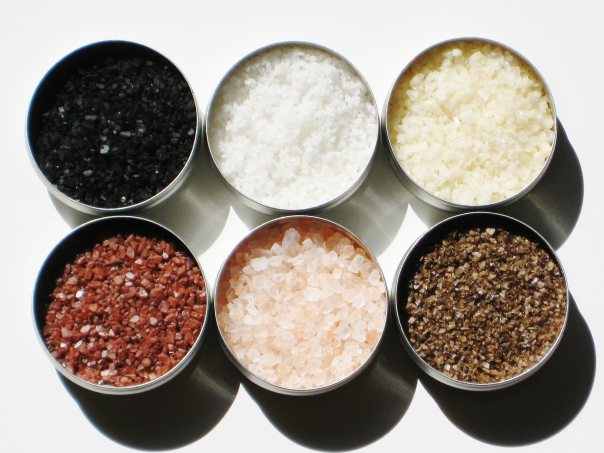
Various unrefined sea salts
This extensive article from "Allergies and Your
Gut" is actually a compilation of several articles that each
relate to salt in some way. As a result it is lengthy, but it is
packed with interesting and useful information. It's one of those
articles that will cause you to change the habits of a lifetime as
soon as you read it, because the change in the type of salt you
purchase isn't difficult or expensive and the benefits are so
overwhelming. It first gives a history of salt which is interesting
reading, though it's not necessary to gain an understanding of the
health benefits and requirements of the human body for salt.
That is followed by a section on "What's Wrong With
Processed Table Salt" which is what we'll focus on in this post.
Following sections focus on the benefits of unrefined sea salt and
various natural types of salt which are available commercially such
as Himalayan Pink, Celtic Sea Salt, Maldon Salt, Alaea or Hawaiian
Red Sea Salt and Black Lava Sea Salt. As is apparent from the names,
salt can come in almost any color - clear, pink, red, blue, black and
yellow.
Originally salt contained many minerals necessary for
proper functioning of the body. The table salt sold today does not
contain these minerals. Minerals also used to be obtained from the
soil through foods grown there, but in recent decades that source is
all but gone, since the soil became depleted of such nutrients long
ago. That's one reason why the refining of table salt is so
problematic. In processing desiccants (anti-caking agents) also are
added so that it doesn't clump together once it's packaged.
There have been a great many news reports and much
medical advice to Americans to limit the amount of salt in their
diets, since it has been blamed for many modern health problems such
as high blood pressure. But it is the refining process that's
responsible for the problems, not the salt itself. In fact, salt is a
crucial element for life. The human body is composed primarily of
water and salt, and the body's potassium/salt exchange is vital for
correct heart functioning.
"It’s soaked
in a solution which may contain sulfuric acid or chlorine and various
bleaches. Then it’s heated to a temperature that removes all the
minerals and other trace elements that our bodies need to function.
Some processed salts are then spray coated with iodine.
Processed table
salt is quite different from natural, unrefined salts. It no longer
has the ability to combine with our body fluids, so undermines
necessary, basic chemical and metabolic processes. Water retention,
kidney and blood pressure problems, gall stones, and many other
serious health problems can result from refined salt consumption.
On average, Americans consume more than 3,400 mg of
refined salt per day. Of this amount, about 75% is derived from
processed food. The other 25% comes from sources such as water
treatment and medications.
When salt is chemically cleaned and processed, the trace
minerals and electrolytes that naturally occur in unrefined salt are
removed as if they were impurities.
Chemically
processed table salt is inorganic, which means that the chemical
bonds are so strong they can’t easily be broken down or metabolized
by our bodies. When you take in an inorganic mineral, your body will
either store it or eliminate it. In this case, when you take in table
salt your body sees it as a poison and tries to get rid of it as
quickly as possible. Unfortunately, most of us take in way more table
salt than our bodies can eliminate. When this happens, the body has
to do something with the excess salt.
Consuming a lot of
chemically processed table salt makes us feel thirsty. That’s because
the body has been put into a tough position. It can’t get rid of the
table salt fast enough so it must neutralize it. To do that it takes
water from healthy cells to surround this salt. As a result, you
retain water and kill off healthy cells."
In addition, spraying refined salt with iodine means
that we often get a toxic build-up of iodine in the thyroid, which
can cause metabolism and immune disorders. Just as with refined salt,
the added iodine is not in a form that is immediately useable by the
body. (See the video on iodine, in the last blog post, Microwaves: Personal Radiation
Ovens) In effect, it becomes a poison. Refined
table salt is disastrous because though it claims to provide two
nutrients crucial for the body, sodium and iodine, in effect, it is
not providing much of either in any useable form.
Vitamin D
"Vitamin D deficiency is associated with a
substantially increased risk of dementia and Alzheimer's disease in
older people, according to the most robust study of its kind ever
conducted. An international team found that study participants who
were severely vitamin D deficient were more than twice as likely to
develop dementia and Alzheimer's disease."
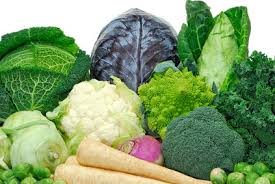
Cruciferous veggies
2 Cruciferous Vegetables
Make It Possible to Absorb Vitamin D Whether we're eating lots of foods rich in vitamin D,
spending time outdoors or taking a supplement, it still doesn't mean
we're getting enough vitamin D if we can't absorb it into our cells.
If it isn't absorbed, we can't use it. To have that vitamin D
biologically active inside us, the vitamin D must be received by
"vitamin D receptors".
"A specific
gene called the VDR (vitamin D receptor) gene codes for this
receptor.
Unfortunately, sick
and unhealthy cells express less of the VDR gene, meaning that they
are unable to accept and use vitamin D. Supplementing with more
vitamin D won’t help these sick cells. Without a receptor site,
vitamin D has nowhere to go.
Broccoli and cabbage contain a very special molecule called sulforaphane.
Research shows that
sulforaphane increases the expression of the VDR gene.
In other words, the
sulforaphane that we find in cruciferous vegetables and herbs like
wasabi helps the body absorb more vitamin D—improving bone mass, as
well as the ability to fight infection, cancer, and inflammation.If
you have cramping intestinal pain, bloating, or gas after munching on
raw cabbage, this is a sign that you cannot tolerate raw, unfermented
cruciferous vegetables."
For people with this problem, you can either culture
your veggies by purchasing a culture starter or ferment them
yourself. Cabbage, made into sauerkraut, is one of the most
beneficial things you can eat because it contains an enormous number
of good bacteria (probiotics). See our post on the health benefits of
sauerkraut: An Old Time Food For a
Healthy New Body or search
the blog for articles under the category "probiotics".
GMOs
and Contaminated Food
"In November 2012, the Journal of Food and Chemical
Toxicology published a paper titled Long Term Toxicity of Roundup
Herbicide and a Roundup-Tolerant genetically modified maize by
Gilles-Eric Seralini and his team of researchers at France’s Caen
University. (source) It was a very significant study that made a lot
of noise worldwide, the first of its kind under controlled conditions
that examined the possible effects of a GMO maize diet treated with
Monsanto’s Roundup Herbicide.
The study found
severe liver and kidney damage as well as hormonal disturbances in
rats fed with GM maize in conjunction with low levels of Roundup that
were below those permitted in most drinking water across Europe.
Results also indicated high rates of large tumors and mortality in
most treatment groups.
The republished
study also has a section describing the lobbying efforts of GMO crop
supporters to force the retraction of the original publication. This
is scientific fraud at its best. The authors express how the previous
retraction was “a historic example of conflicts of interest in the
scientific assessments of products commercialized worldwide.”
There were 10 significant findings from the study. These
are:
1. Multiple Toxins From GMOs Detected In Maternal and
Fetal Blood
2. DNA From Genetically Modified Crops Can Be
Transferred Into Humans Who Eat Them
3. New Study Links GMOs To Gluten Disorders That Affect
18 Million Americans
4. Study Links Genetically Modified Corn to Rat Tumors
5. Glyphosate Induces Human Breast Cancer Cells
Growth via Estrogen Receptors
6. Glyphosate Linked To Birth Defects
7. Study Links Glyphosate To Autism, Parkinson’s and
Alzheimer’s
8. Chronically Ill Humans Have Higher Glyphosate Levels
Than Healthy Humans
9. Studies Link GMO Animal Feed to Severe Stomach
Inflammation and Enlarged Uteri in Pigs
10. GMO risk assessment is based on very little
scientific evidence in the sense that the testing methods recommended
are not adequate to ensure safety.

How to Tell GMO Foods
from Organic or Conventionally Grown It has been estimated that 80% of all processed food in
the US contains GMOs, food that has been altered at a genetic level
in a laboratory. Plants, foods, even animals and fish all have been
altered in this manner in recent years. For example, a new strawberry
type said to be frost tolerant, has been created by insertion of a
gene from "a cold ocean dwelling fish". Does that sound like
something you'd want to eat?
"According to
government statements testing has been done on these so-called
“Franken-foods” and they were found to be “substantially equivalent”
to the original food.
The American
Academy of Environmental Medicine has shown that consumption of GMO
foods are linked to genetic problems with: Insulin control,
cholesterol, protein formation, and cell signaling, changes in the
kidney, liver, spleen and gastrointestinal system, accelerated aging,
a weakened immune system and even infertility.
It can be difficult
to know how to avoid GMO foods. There is no government standard on
labeling and companies are not required to tell you if the products
they’re selling you contain them.
So how can you
avoid GMO foods and not eat foods spliced with random genes?
There are ways. First you can look for PLU codes. It’s okay, I
didn’t know what they were either. It stands for Price look-up
codes.
The next time you’re
in the grocery store pick up a piece of fruit. There’s a good chance
it has a sticker on it with a four or five digit number on it. If it
has five numbers look closer.
Requirements by the
International Federation for Produce Standards require that the first
number be a ‘9’ if the item is organic and ‘8’ if it’s a GMO. Nine is
just fine but hate the eight."
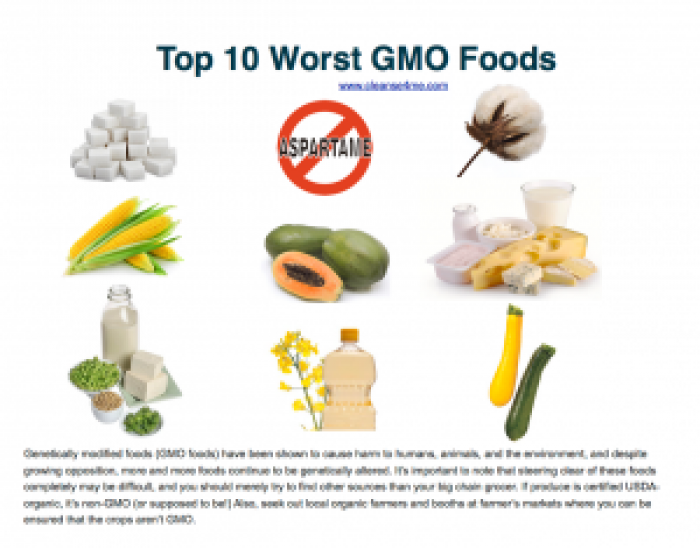
10 worst GMO foods
List of Vegetables That
Are Genetically Modified This is a very interesting site, even for those who
think they're up on all the nuances of GMO foods. I've been most
careful in buying only the "ugly heirloom" tomatoes sold at
Walmart, among other places, because genetic modification of tomatoes
was one of the first we were warned about. But in reading this recent
article, I learned that GMO tomatoes aren't around much anymore. Did
the companies producing them suddenly become concerned about public
health? Or did the government finally regulate them out of existence?
No to both of those questions. However, tomatoes (and potatoes), once
both a health concern, aren't being produced much in GMO varieties
because they didn't ship or store well. For that reason, fast food
chains refused to purchase them so production of them has been
discontinued. Profit. The bottom line for most decisions about our
food supply has given a boost to consumers for once. You'll
find lots more information of interest here as well.
Pet
Health
How Much Do Dogs Sleep?
The answer to that question will depend on several
factors: the age of the dog, the breed, the activity level (ordinary
house pet versus service dog) level of boredom and interruptions. An
average dog will sleep half of his life, roughly 12 hours daily,
though some breeds sleep up to 18 hours each day; like people, some
dogs love to sleep more than others do. The video, below, is a good
example. An older dog will sleep more, and the more noise around your
house, the more your pet's sleep is interrupted. Although they have 2
sleep cycles just like humans, they often sleep in bursts so they are
up and awake when there's activity going on. They'd never want to
miss a chance for a walk or a game by sleeping!
"It’s also
important to realize the importance of getting a good solid night of
sleep. Imagine someone waking you up while you are sleeping, and how
hard it is for you to get back to sleep sometimes? Now think about
your house and being a dog trying to sleep while everyone is making
noise. It can be quite a stressful place sometimes, so when you dog
does find time to sleep, try and let them sleep soundly and not annoy
or try to wake them up.
One way to ensure
your best friend has the best sleep possible, is to make sure they
have comfortable sleeping conditions. A quite [sp] area with comfy
blankets or even a dog bed would do wonders for a comfortable and
quite [sp] sleep area. When preparing an area for your dog to sleep
and rest, simply think about what you would like to have, and they
will appreciate you that much more."
Health
and Nutrition
"Adults who
say they sleep between seven and eight hours per night miss fewer
work days due to sickness than others, according to a Finnish study.
The researchers
calculate that if insomnia, apnea and other kinds of sleep
disturbances were eliminated, the total cost of worker sick days
could be cut by 28 percent.
“Our ability to
sustain attention and maintain peak cognitive performance is
significantly reduced if we are sleep deprived over longer
periods....”
“Those sleeping 5
hours or less or 10 hours or more were absent from work 5 to 9 days
more each year, as compared to those with optimal sleep,” Lallukka
said.
“People who get the
sleep they need may in general take better care of their own health
and wellbeing, which obviously maintains work ability, too,” Salo
said by email.
Lallukka noted that
individual sleep needs may vary, and one person should not
necessarily apply the results of the population-level observational
study to their day-to-day routine."
Applying
pesticide to fields
"Researchers
say ancestral exposures to the pesticide methoxychlor may lead to
adult onset kidney disease, ovarian disease and obesity in future
generations.
"What your
great-grandmother was exposed to during pregnancy, like the pesticide
methoxychlor, may promote a dramatic increase in your susceptibility
to develop disease, and you will pass this on to your grandchildren
in the absence of any continued exposures," says Michael
Skinner, WSU professor and founder of its Center for Reproductive
Biology.
Methoxychlor --
also known as Chemform, Methoxo, Metox or Moxie -- was introduced in
1948 and widely used during the 1970s as a safer replacement for DDT.
It was used on crops, ornamental plants, livestock and pets. It is
still used in many countries around the world.
It was banned in
the U.S. in 2003 due to its toxicity and ability to disrupt endocrine
systems. Methoxychlor can behave like the hormone estrogen and
profoundly affects the reproductive system."
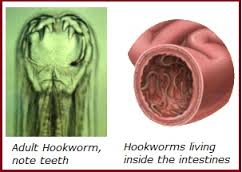
Hookworms - Inside the intestine and
showing teeth
"Groundbreaking
results were achieved in a clinical trial using hookworms to reduce
the symptoms of celiac disease. The results are good news for
sufferers of other inflammatory conditions such as asthma and Crohn's
disease. In the small trial run over a year, 12 participants were
each experimentally infected with 20 Necator americanus (hookworm)
larvae. They were then given gradually increasing doses of gluten,
with their daily dose in the final stage being equivalent to a
medium-sized bowl of spaghetti.
Significantly, all
the trial subjects rejected the researchers' offer of drugs that
would eliminate the hookworms. "They all chose to keep their
worms, and they continue to report good health. However they were
instructed to return to a gluten-free diet after the trial,"
Professor Loukas said.
The potential of
helminths (parasitic worms) in treating inflammatory diseases lies in
their ability to dial back the human immune response -- a skill that
enables them to survive, and thrive, in the human gut, without
compromising their host's ability to fight off other infectious
diseases."
"Australian
researchers have found that hookworms can be used to reduce the
symptoms of celiac disease, as well as other inflammatory conditions
such as asthma and Crohn's.
Two-third of the
participants in the study were able to increase their gluten
tolerance by a factor of 60, said Alex Loukas, head of the Centre for
Biodiscovery and Molecular Development of Therapeutics at JCU.
"We and others
have had promising results in earlier trials but this is clear
proof-of-principle of the benefits of hookworm in treating
inflammatory disease," said Loukas.
"This trial
has confirmed hookworms as our choice of parasite for clinical
applications," said Loukas. "But despite our growing
fondness for them, we do acknowledge that a protein pill will have
broader market appeal than a dose of worms."
Conclusion
Your physical
health is very important, but of even greater importance is your
spiritual health. Man suffers from a fatal spiritual disease called
sin, which always leads to death. Romans 6:23 For the wages of sin is
death; but the gift of God is eternal life through
Jesus Christ our Lord.
This is why Jesus Christ
said we need the Spirit of God who gives us eternal life with Him. We
need to be “born again” with a new spirit that is not subject to sin
and death.
John 3:3 Jesus answered and said unto him, Verily,
verily, I say unto thee, Except a man be born again,
he cannot see the kingdom of God.
Right now, through
repentance of the spiritual disease called sin, you can come to Jesus
Christ, the Great Physician, for healing and assurance of eternal
life.
Mark 2:17 When Jesus heard it, he saith unto them, They
that are whole have no need of the physician, but
they that are sick: I came not to call the righteous, but sinners to
repentance.
For those who love the
Lord Jesus and are looking for His coming, the following is their
future:
Revelation 21:4 And God shall wipe away all tears from their
eyes; and there shall be no more death, neither sorrow, nor crying,
neither shall there be any more pain: for the former things are
passed away.
|